How eCommerce Companies in California Can Rank #1 on Google Maps - CoderKod

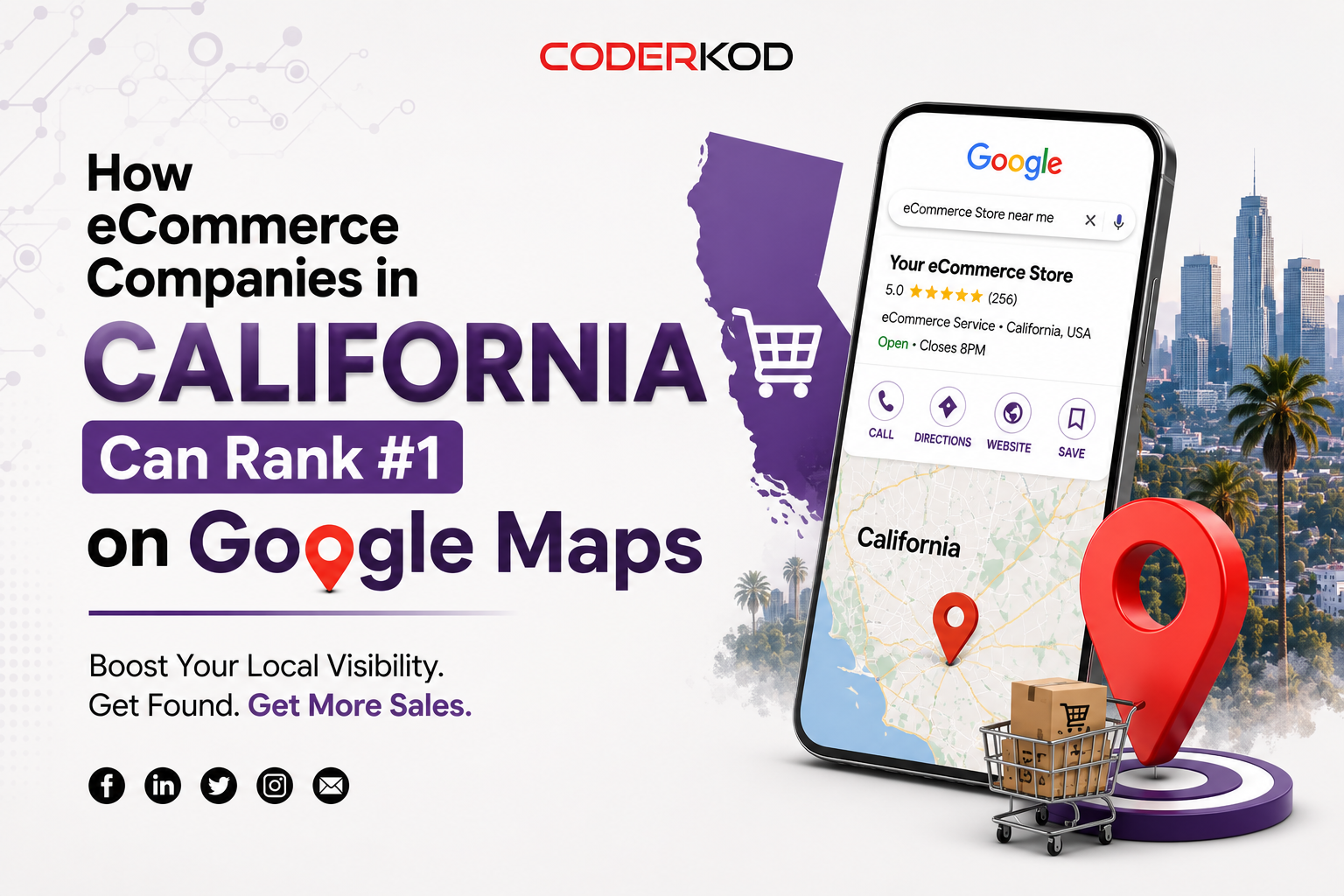
How eCommerce Companies in California Can Rank #1 on Google Maps

If you run an eCommerce business in California — whether you’re based in Los Angeles, San Francisco, San Diego, or Sacramento — you might assume Google Maps doesn’t matter for you. After all, you’re selling online, not running a storefront people walk into.

That Assumption is costing you Customers 

Google Maps rankings aren’t just for restaurants and dentists. Any eCommerce company with a physical location — a warehouse, a showroom, a pickup point, or even a registered business address — can show up in local map packs, and that visibility drives trust, foot traffic to fulfillment centers, and clicks that convert better than generic organic listings. Here’s how California eCommerce brands can climb to the top.

Why Google Maps Matters for eCommerce, Not Just Local Retail

When someone searches “buy [product] near me” or “[your niche] store California,” Google increasingly blends local map results with standard organic listings — even for brands that primarily sell online. If a competitor has claimed and optimized their Google Business Profile and you haven’t, they’re capturing that visibility by default.

For California eCommerce companies specifically, this matters more because:

– California has some of the highest search volume and eCommerce competition in the country

– Many California cities (LA, SF, San Jose) have dense competitor clusters, making local signals a differentiator

– “Near me” and city-specific searches convert at a higher rate than generic national queries

Step 1: Claim and Fully Optimize Your Google Business Profile

This is the foundation. A verified, complete Google Business Profile (GBP) tells Google you’re a legitimate, active business.

What to include:

– Accurate business name (matching your website exactly — no keyword stuffing like “Best Shoes Store LA”)

– Correct category (e.g., “Shipping and mailing service,” “Warehouse,” or your specific retail category)

– Complete address, even if it’s a fulfillment center rather than a public storefront

– Business hours, phone number, and website URL

– High-quality photos of your product, packaging, or facility

If your eCommerce business doesn’t have a public-facing storefront, use Google’s service-area business (SAB) setting instead of listing a street address — this is critical for compliance and avoids suspension.

Read More About: Best Digital Marketing Agency in Lahore

Step 2: Build Location-Specific Landing Pages

Generic “Shop Now” pages don’t carry local signals. Create landing pages targeting specific California cities relevant to your customer base or fulfillment locations:

– “[Product Category] Delivery in Los Angeles”

– “Same-Day Shipping to San Diego Shoppers”

– “[Your Brand] Now Serving the Bay Area”

Link each of these to your main eCommerce category or service page, and cross-link them to each other to build a local content cluster (see internal linking section below).

Step 3: Earn Local Citations and Reviews

Google Maps rankings depend heavily on three factors: relevance, distance, and prominence. Prominence is built through citations and reviews.

Action items:

– Get listed on California-specific business directories (Yelp, California Chamber of Commerce listings, industry-specific directories)

– Ensure your NAP (Name, Address, Phone) is identical across every listing

– Actively request reviews from California customers, and respond to every review — Google rewards active engagement

– Highlight local delivery speed, California-based customer service, or California-sourced products if applicable, since these can become natural review themes

Step 4: Localize Your On-Page SEO

Your product and category pages should speak to your California audience where relevant:

– Reference California-specific shipping zones or delivery windows

– Mention state-specific compliance (e.g., California Prop 65 warnings, CCPA-compliant data practices) — this builds trust and can appear in relevant local searches

– Use schema markup (LocalBusiness or Organization schema) to reinforce your address, hours, and service area to Google’s crawlers

Step 5: Build California-Specific Backlinks

Backlinks from California-based sources (local business journals, city Chamber of Commerce sites, California-focused industry blogs) signal geographic relevance far more strongly than generic backlinks.

Look for:

– Guest posting opportunities on California small business or retail blogs

– Sponsorships or partnerships with California-based influencers or events

– Local press coverage of your fulfillment center, hiring, or community involvement

Step 6: Track the Right Metrics

Don’t just track national rankings. Monitor:

– Map pack impressions and clicks by California city (via Google Business Profile Insights)

– “Near me” and city-specific keyword rankings

– Direction requests and website clicks from your GBP listing

Internal Linking Checklist for This Post

To turn this article into a true SEO asset rather than an island page, link it into your existing site structure:

– Link the phrase “local SEO services” above to your main `/local-seo-services` page

– Link “Google Business Profile optimization” to a dedicated service page if you offer it as a standalone package

– At the bottom of the post, add a “Related California SEO Resources” module linking to companion pieces like:

  – “SEO Services in Los Angeles“

  – “SEO Services in San Francisco“

– “How Retailers in California Can Improve Local Search Visibility”

– Link back up to your state pillar page (“SEO Services California”) so this article sits correctly within the topical cluster

Final Thought

Ranking #1 on Google Maps as an eCommerce company isn’t about gaming the system — it’s about proving to Google, through consistent local signals, that you’re a relevant, trustworthy option for California shoppers. Companies that treat their Google Business Profile as seriously as their homepage are the ones capturing this traffic before their competitors even realize it’s available.

Learn More: How to Add an AI Chatbot to Your Business Website


11 Website Mistakes That Drive Visitors Away and How to Fix Them

Engaging and retaining visitors’ attention is essential to running a successful site. An accessible site is a necessity for the company/organization. However, many common site mistakes drive visitors away, which lowers the potential customer’s conversion rate and bottom line. Investment in good mobile UX will also impact Google Search Engine rankings. A speedy, friendly site helps rank higher in Google SERPS.

In this article, we will explore typical website errors hindering website functionality and poor user experience. We will help you resolve each issue, eventually leading to a relevant audience, hassle-free user experience, and a mobile-friendly website and help you achieve business goals.

Unclear Goals

Each site must have clear goals and purpose. Without clear goals or purpose for what you want for business, what to put on it, what will be the strategy? Otherwise, it will be a poor, confusing site that will drive people away.

Spend some time to decide what the goals and objectives of your website are. If you plan on selling products or services, what do you plan to provide informative content to your users? Once you have a clear idea of what your goals and objectives are, you can align your website design layout and content to those objectives.

Before you come up with a single line of code or draw up an element, take some time to define your website’s purpose. With that in mind, the rest will fall into line.

Some of the most common website goals are

  • Generating revenue or leads
  • Creating brand awareness
  • Showcasing products or services
  • Informing individuals
  • Providing customer support

If you know your destination and what you are going to offer or what content will drive customers in and generate income, then you will recognize that each page is helping you get to your destination.If you have not yet decided on your goals, do the expert exercise to help you.

Put on paper what you would like your website to do

Create a “Customer Journey Map” to trace the steps of a visitor from start to finish through your site.

Having a web design brief covering goals, scope, and timing from the outset can prevent miscommunication and keep everyone on the same page.

Cluttered Website Design

A neatly designed website simplifies the customers’ navigation and understanding of what the website is all about using precise information. Make your website design brief and simple so that the users may readily search for what they need. If your website design must be precise and users find it convenient to use, they will never return to your website.

Few tips to create a user-friendly website:

  • Applying generous white space
  • Applying clear and concise headers and subheaders
  • Creating simplistic navigation menus
  • Keeping pages concise
  • Restricting the use of images and videos
  • Implementing calls to Action

Your site should reflect your brand and be easy for the visitor to use and wrap their heads around. If your site depicts a formal atmosphere, then it needs to be a formal atmosphere on all pages. If it’s playful or relaxed, then it should depict that too. That way, the visitor will be able to navigate it better and be able to locate what they’re looking for.

Call to Action

Call-to-Action button is also crucial in the lead of customers or leads. It makes you sign up, perform a specific Action, schedule an appointment, or buy something. The button is also helpful to know the visitor counts. Your website should have a clear Call-to-Action button on all your pages.

If you can’t even determine what CTA button would be appropriate on your web content, attempt A/B testing and check what works better for you. Match your purposes with the CTAs for attaining greater sales or leads. 

Website Copy

Website content should be in readable persuasive language convincing visitors to take Action. It should be readable, concise, and grammar and spelling error-free. A good website content should have case studies, reviews, customer testimonials, and stories engaging the visitors. It will also help the visitor with what they need, making informed decisions on what they can do, their background, and their history of satisfied customers.

Good content will help keep your visitors; your content will come in handy to your site. Your content has to be readable, relevant, informative, and well-written for users to clearly understand and stick around on your site. Create content that will answer your viewers’ questions and the answers to which they seek and fix their problems. Stuffing keywords into your content or using overly promotional wording has to be evaded.

Loading Speed

Slow page loading is a huge turnout for web users. They will definitely abandon that site when it is difficult to load the page and search for an alternative. This implies that the site needs to be optimized to its maximum and there are issues. To address these issues, try compressing images, minifying CSS and JavaScript files, and using short caching techniques. Moreover, increasing the web hosting package loads faster web pages.

Mobile Responsiveness

Users use mobiles predominantly for surfing, so there’s a need to make sure that your site is mobile-responsive. This will help get big traffic on your website. An intelligently built, mobile-responsive site will instantly optimize its screen and rotation as per the device. This will get users to linger on your website and also create a satisfactory browsing experience.

Broken Links

Broken Links negatively and drastically affect your site, and this may be a reason for visitors to lose their way. To keep your online presence in good shape, check and fix broken links from time to time. With the help of plugins or tools used to fix broken links promptly, you can offer your users a smooth browsing experience.

Navigation Problems

Simple navigation is essential for a website; it helps users access information easily. Poor navigation chases away visitors and damages your website since they need help in finding what they are looking for. To solve this issue, organize your website content into categories and subcategories so users can easily find what they are looking for. The hierarchical structure will make the visitor’s experience easy and gather information, providing them with a direct way to view the content they wish to see on the website. It will retain visitors and engage your site.

Too Many Pop-ups

Pop-up advertisements are good for collecting emails or promotions. Too many pop-up advertisements are harmful and break users’ browsing experience. Don’t place too many, which will frustrate users and drive them away. Place them sparingly, and they should be easy enough to close.

Lack of Contact Information

The need for correct information on your address and contact number is an ill sign for your website. Your visitors who need more adequate information to reach your website will find it suspicious and questionable. Provide correct address and contact details on the home page and footer of every page.

Intrusive Advertisements

Intrusive ads totally ruin your website’s credibility and get the visitors annoyed. These also spam your website and rob it of its genuineness. Otherwise, Ads are fine for earning revenues and monetization. But placing your keywords ideally on your website is a smart idea which never takes away from your website content and is relevant to your viewers.

Conclusion

A well-designed, user-friendly website is crucial for keeping visitors and achieving business objectives. Steer clear of common pitfalls such as unclear objectives, confusing layout, slow speed, and navigation problems to provide a smooth user experience. A distinct call-to-action (CTA) invites visitors to participate, and being mobile-friendly enhances visibility. Flawless website copy that is engaging and mistake-free fosters credibility and trust.

Fixing technical problems like broken links and too many pop-ups improves usability and avoids frustration. Giving correct contact details assures users of your authenticity. Moreover, restricting intrusive advertisements keeps the environment professional and interactive. By finding and fixing these website errors, companies can increase traffic, enhance conversions, and establish long-term customer relationships. An optimized website improves brand reputation and search engine rankings, ultimately leading to success. Regular site audits and improvements will ensure a positive user experience, helping you stand out in today’s competitive digital landscape.


How to Select the Best Graphic Design Services

A house needs different things to be built; likewise, a business requires different things.
So, graphic designing is the essential step in creating a website. In this era, visuals speak
louder than words.

A well-designed logo, layout, and collateral will help your brand grow and the best graphic
design help you compete with your competitors. They are the key elements that propel your
brands to succeed. Finding a skilled graphic designer who fulfills all your demands with the best
results is difficult.

In this blog, we will help you with what to consider when choosing the best graphic design services.

Why is choosing the right graphic design service company important?

An excellent graphic design services company is more than just a service provider. They are
your partners in growth, transforming your concepts into powerful visuals that speak to your
audience. They help you develop your brand identity across all channels with impactful visuals
that resonate with your business goals and vision. From thoughtfully crafted creative logo
design services to motion graphics, collateral prints, impressive website layouts, and social
media graphics, they strongly reflect your brand’s vision and recognition.

On the other hand, a poor or inexperienced company can damage your reputation in the market
by creating a substandard design that fails to attract the targeted audience, resulting in low
conversions and leads.

Factors to consider when choosing Graphic Design Service Company Portfolio

When looking for the best company, always look for graphic design portfolios to know how much
they are in the trend or market. Their portfolio speaks to their experience, creativity, and
expertise in graphic design. Check their project’s versatility and evaluate how much they can
modulate their work according to the brand’s vision.

Check different things such as company brochure design, roll-up banner design, social media
graphics, logos, motion graphics, and website layout. This will help you evaluate any company
while deciding your business future. If their portfolio fulfills all your business needs, opt for that
company.

Experience

After looking at graphic design portfolios, you must examine their field experience. From
experience, you can evaluate their market value and check their old clients feedback, reviews,
testimonials, and case studies.

You can evaluate their professionalism, work ethics, and work quality. Experienced graphic
design companies are known to deliver the best design services, digital designs, and solutions
tailored to client’s requirements. Ultimately, partnering with a professional graphic design
company affords clients the assurance of quality, reliability, and innovation. This will help them
succeed in a competitive market landscape in long-term success.

Communication

Effective communication plays an important role in ensuring the success of a project. It is
essential to choose an agency that values transparency and involves you in every step, from the
very beginning of the process of digital design to the final execution.
When an agency is transparent to its clients, they are open about its strategies, methods, and
project progress, which helps to build trust among clients. By involving the clients in every step,
they ensure that your vision transforms into reality and can be customized according to experts
advice or client needs. This approach leads to a more collaborative and productive work
environment, produces result-driven traffic, and leads to successful project outcomes.

Pricing

Choose a graphic design company with a well-structured pricing plan and no hidden charges.
Don’t be attracted to substandard graphic design agencies that offer low prices; conversely,
they will provide you with low-quality work and cheap graphic designs. A clear and concise plan
will help you in the future to ensure smooth workflow and non-disturbance and give you suitable
services of graphic design rates.

Be Clear about your goals

When you start working with a graphic designer, it’s important to be clear about everything, from
your business and brand goals. From a clear explanation of the project, vision, requirements,
custom designs, and preferences, tell them which audience you are targeting. Each detail
provided, such as the time frame and any other important information, will help the professional
graphic designer understand the fundamentals of the project and meet your expectations. This
helps to minimize confusion and misconception between both parties.

Furthermore, being clear about your goals will also help the designer provide a precise estimate
of the project’s cost. It will help them understand what you need for your business, mission, and
goals so they can quote you the exact amount to fulfill them.

Being open and transparent about your goals can set a solid foundation for a successful
collaboration with the designer and ensure that both parties are satisfied with the final result.

How Can Social Media Transform Your E-commerce Success?

Social media is a digital space where people connect, share, and interact. It includes platforms like Facebook, Instagram, and Twitter. Businesses use these platforms to reach customers and promote products.

Growing an online store is tough without the right strategy. Social Media for ECommerce helps businesses attract and engage buyers. It creates brand awareness and drives sales through interactive content.

Many businesses use social media to showcase products. They post images, videos, and customer reviews. These platforms also offer paid ads to target the right audience.

Social Media Platforms

  • Facebook
  • Instagram
  • Twitter
  • Linkedin
  • TikTok

Facebook

Facebook supports companies to succeed in e-commerce because of their marketing tools and user engagement features with their enhanced audience segmentation capabilities. Here’s how:

  • The platform possesses billions of users which allows businesses to identify potential customers across the entire world.
  • The Facebook ad system identifies targeted customer segments through analysis of users’ preferred interest choices applied to their geographical positions and reactions.
  • Users can reach direct sales by utilizing Facebook Shops on the platform which delivers an effortless online purchasing experience.
  • The platform strengthens customer trust through comments and messages and live videos and relationship-building functions.
  • Through Data Insights from Facebook users gain access to results monitoring which enhances their ability to optimize their marketing strategies through analysis.
  • The Facebook features help your e-commerce store reach better branding exposure and gain more clients together with increased sales figures.

Instagram

Your commercial success grows from using Instagram due to its ability to improve brand exposure along with customer retention while simultaneously raising your selling numbers. Here’s how:  

  • Visual content uploaded on Instagram works well because users demonstrate their preference for viewing appealing screen content.  
  • The Shoppable Posts on Instagram Shopping allows users to directly buy products presented in any social media post or story content.  
  • Appropriate hashtags in your marketing raise visibility to potential shoppers who will become visible to you.  
  • Working with influencers gives businesses dual advantages of built-up brand trust and enhanced marketing potential that extends past established boundaries.  
  • Users check out short content through Reels and Stories to both engage with it and buy products instantly.  
  • Instagram provides business tools that help companies extend their operations through client interaction to perform efficient e-commerce transactions on the platform.

Twitter

Twitter transforms your e-commerce business into success because it builds brand awareness while attracting customer participation that results in increased website visitors. Here’s how:

  • Twitter enables users to connect urgently with customers through the combination of tweets replies and polls.
  • The adoption of popular hashtags allows firms to contact multiple audiences and enhance their marketplace visibility.
  • The quick responses delivered by Customer Support through queries improve customer trust and results in better satisfaction feedback.
  • Through Twitter businesses build relations with their customers either by sharing promotional messages about products or delivering new release announcements along with promotional discounts.
  • Companies using Twitter Ads enjoy promotional features which guide their marketing strategy to target particular audiences and drive visitors to their ecommerce sites.
  • Organizations which use Twitter strategically can generate customer relationships and drive revenue development for digital growth.

Linkedin

LinkedIn can turn your e-commerce success around by establishing credibility, connecting with professionals, and generating quality leads. Here’s how:

  • Professional Branding – LinkedIn establishes your business as a thought leader in your field.
  • B2B Networking – It brings you in touch with potential partners, vendors, and business customers.
  • Content Marketing – Publishing insightful articles and posts builds brand awareness and engagement.
  • LinkedIn Ads – Targeted ads enable reaching decision-makers and increasing conversions.
  • Trust & Credibility – Recommendations and positive reviews create trust among potential customers.

Through the use of LinkedIn, companies can expand their network, gain high-value customers, and increase e-commerce success.

TikTok

TikTok can boost your e-commerce success by building brand awareness, engaging consumers, and generating sales. Here’s how:

  • Viral Marketing – Short, informative videos can gain a huge audience.
  • TikTok Shop – Companies can directly sell on the platform, which makes shopping easy.
  • Influencer Power – Collaboration with creators raises credibility and product visibility.
  • Hashtag Challenges – Popular challenges create user engagement and brand visibility.
  • Paid Ads & Analytics – Targeted ads and data analysis enable the fine-tuning of marketing efforts.

With TikTok’s special abilities, companies are able to engage customers, generate more engagement, and drive more e-commerce purchases.

Social Media Strategies

  • Set clear goals
  • Understand your audience
  • Choose your social media platform according to your business or product demand 
  • Set your social media advertising campaign budget
  • Customize your campaign according to the product or customer behavior
  • Build your profile or page on your preferred social media channel
  • Have a mobile approach
  • Utilize chatbots to maximize user interaction
  • Maximize User-generated Content
  • Post Content in the form of photos, reels, etc
  •  Collaborate with influencers/ social media content creators
  • Maximize interaction and engagement
  • Track metrics and analyze the progress of your social media strategy

FAQs

What is the ideal social media platform for eCommerce?

Facebook and Instagram are the best fit for eCommerce due to their advanced ad targeting, shoppable posts, and large user base.

What are the drawbacks of social media on eCommerce?

Increased competition, algorithm updates, and potential negative reviews may influence brand reputation and sales.

What are the Various Forms of Digital Marketing?

Digital marketing includes SEO, content marketing, social media marketing, email marketing, PPC advertising, and influencer marketing.

Conclusion

Social Media for ECommerce helps businesses grow and target more customers. It helps businesses promote their products, interact with consumers, and build trust. Facebook, Instagram, Twitter, LinkedIn, and TikTok offer different tools to reach and connect with people. Businesses use these platforms to make posts, upload pictures, and run ads. This helps to reach the right audience and make sales.

A good social media strategy drives online success. Clear goals, the right platform, and the use of ads help businesses grow. Posting great content and cooperating with influencers drive engagement. Keeping track of progress ensures better results. With the right approach, Social Media for ECommerce is a great instrument for business success.

Web Development Tools Every Developer Must Know

Web development is the process of designing and maintaining a website. Web application coding, web designing, and web application optimization are all included in it. Web developers use many tools to create speedy, secure, and accessible websites.

Selecting the right tools makes web development easier and more efficient. Best Website Development Tools help programmers write effective codes, debug programs, and manage projects. Websites work well and provide a great user experience with the right tools.

There are numerous front-end, back-end, and full-stack development tools. They are coding tools or design, testing, or collaboration tools. Knowledge of these tools can improve workflow and productivity in web development.

What Is Web Development?

Web development is the method of making, building, and maintaining websites or web applications. It involves coding, designing, and getting a website running smoothly across various devices and browsers. Various programming languages, frameworks, and tools are utilized by developers to create responsive and user-friendly sites.

Web development comes in three broad categories: front-end development, where one does the interactive and visual aspect of a website; back-end development, where one engages with server-side logic and databases; and full-stack development, where one has the knowledge of both front-end and back-end.

What are Web Development Tools?

Web development tools help web developers make software of websites to test, debug, and solve web coding issues, resulting in good websites. They help design web applications, support responsive layouts, and bring in visual attraction. They also include site security and optimize the performance for the greatest effectiveness.

Front-end Development Tools vs Back-end Development Tools

Front-end and back-end development tools have different functions to carry out in web development. Front-end development tools help in building the graphical aspect of a website, such as layout, design, and user interface.

Front-end development tools comprise frameworks such as React, Angular, and Vue.js, and CSS preprocessors such as SASS and LESS. They transform a website into a responsive, fast, and good-looking site.

Back-end application tools are responsible for server logic, database utilization, and program operations. Some of the available tools are Node.js, Django, Laravel, and databases MySQL, and MongoDB. Using these applications, developers can process user requests, save data, and ensure website performance as needed.

Both front-end and back-end software are needed to develop a full website. Front-end software is all about user experience, whereas back-end software is all about data and server-side processes. Both are used by developers to develop dynamic, high-performance web applications.

Best Website Development Tools

Below are some of the best website development tools available in the market.

Front-End Web Development Tools

Front-end programming involves creating the user interface and experience of a web page or web application. The following tools assist developers to create interactive and engaging web pages:

React – JavaScript library built by Facebook for creating dynamic user interfaces with reusable components.

Vue.js – Progressive JavaScript framework that has been praised for being easy to use as well as being flexible enough to build single-page applications.

AngularJS – A powerful front-end framework created by Google for building scalable, dynamic web applications.

Bootstrap – A widely used CSS framework for making responsive web design easy with pre-made elements and a customized grid system.

Tailwind CSS – A utility-first CSS framework that allows developers to build stylish and custom designs without having to write a lot of CSS code.

Back-End Web Development Tools

Back-end development takes care of the server-side logic, database functionality, and business functionality of a web app. The following tools and frameworks must be used in order to create efficient back-end solutions:

  • PHP – A widely used server-side scripting language for dynamic web applications.
  • Python – A versatile programming language used in web development, data science, and automation.
  • JavaScript – Used mostly as a front-end language but used in back-end also with Node.js.
  • Node.js – A JavaScript execution environment that facilitates the language for server-side usage.
  • Django – A Model-View-Template (MVT) architecture-based Python web framework and most appropriate for developing web applications rapidly.
  • Ruby on Rails – An influential web application framework developed using Ruby with convention-over-configuration.
  • Laravel – A PHP web framework that makes back-end coding easier with built-in authentication, routing, and database management capabilities.
  • Express.js – Lightweight and flexible Node.js web app framework for high-performance, scalable web application development.

Integrated Development Environments (IDEs)

IDEs offer a built-in development environment with provisions such as editing the code, debugging, and version control. The following are some of the most effective web development IDEs:

  • MS Visual Studio Code – Light, yet powerful Microsoft code editor with syntax coloring, IntelliSense, and Git support.
  • Sublime Text – A fast, highly extensible text editor with a rich plugin ecosystem.
  • Atom – A hackable text editor created by GitHub with real-time collaboration and native Git support.
  • WebStorm – A feature-rich IDE from JetBrains specifically designed for JavaScript and web development.
  • Eclipse – An open-source IDE with broad adoption that supports many programming languages and frameworks.

Project Management & Collaborative Tools

Effective project management and teamwork are success factors for development teams. The following tools facilitate workflows, communication, and version control:

  • GitHub – A web-based code repository management platform, change tracking, and collaborative working on a project.
  • GitLab – A DevOps tool with built-in version control, CI/CD pipelines, and project management capabilities.
  • Bitbucket – A hosted Git repository with built-in CI/CD and integration with Jira for team collaboration.
  • Trello – A graphical project management board where teams can work on tasks through boards, lists, and cards.
  • Slack – An instant messaging system that enables real-time messaging, document sharing, and team collaboration.

Conclusion

The most effective tools for web development are essential to create efficient, secure, and user-friendly websites. From the front-end tools like React and Bootstrap to back-end frameworks like Node.js and Django, they are all the necessary development tools. Code optimization is facilitated by IDEs like Visual Studio Code and Sublime Text, and collaboration is made more efficient using project management tools like GitHub and Trello. Developers can create high-performance web applications with streamlined workflows and improved productivity using the right web development tools.

What is Digital Marketing? An Essential Guide

A well-thought digital marketing strategy is crucial for business success in today’s business environment. Three things are vital to consider when setting up the digital plan.

It is crucial for businesses looking to improve their online presence and growth to learn about the basic principles of digital marketing. This guide focuses on a range of techniques like SEO, content marketing, social media, and email campaigns to gain better insights into the dynamic world of digital marketing.

This blog provides in-depth information regarding digital marketing strategies, including internet marketing basics, implementing a plan, and measuring results. It offers help right from the start.

What is Digital Marketing?

Web marketing, or online marketing, is a craze that is all about being hotshot nowadays in this digital technology age. It enables your business to move in the right direction by driving potential customers, sales, and engagement. It makes it possible for businesses to reach out to potential buyers in real-time, creating brand loyalty and customer satisfaction.

Internet Marketing is a correct and effective way for organizations to reach the target audiences through several internet media such as search engines, emails, and social networks. It allows entrepreneurs to target their target audiences accurately and drive potential consumers and conversions.

Evolution of Digital Marketing

Internet marketing has evolved in depth with advanced technology and consumer behaviors.

Firstly, the traditional marketing methods of online marketing campaigns are basic email marketing campaigns and web banners for advertising.

Online marketing channel tools such as Facebook, Instagram, and Twitter are used to introduce enormous changes in digital advertising. These digital marketing channels create enormous social media traffic and engagement with content personalization.

When smartphones became a norm everywhere, mobile app optimization was the need of the hour. Websites and campaigns needed to be optimized for mobiles so that they could access customers.

The advent of trending video content on platforms such as YouTube and TikTok also transformed internet marketing. Video marketing became a powerful digital strategy tool to share stories and interact with customers in order to allow brands to engage more audiences on a deeper level.

Types of Digital Marketing

Digital marketing entails various strategies and techniques to reach and engage target audiences on the Internet. There are many Internet marketing ways but the primary six are assuming an additional dimension of relevance for successful digital marketing campaigns.

These six tactics include search engine optimization (SEO), pay-per-click advertising (PPC), content marketing, social media marketing, email marketing, and influencer marketing. These tactics all play a significant role in driving traffic to a website, creating brand awareness, and eventually resulting in conversions.

Search engine optimization (SEO)

SEO ensures a website is well-ranked on the search engine result pages, thus increasing visibility and organic traffic.

Pay-per-click advertising (PPC)

PPC allows businesses to steer potential keywords and audience demographics towards paid ads using platforms like Google Ads or Facebook Ads.

Social Media Marketing

Make use of common social websites like Facebook, Instagram, Twitter, and LinkedIn to interact with users through content sharing, community creation, and sponsored advertisements. Content marketing strategy is committed to creating relevant content and related social media content in order to attract prospective customers and build credibility within the industry.

Email Marketing

Email campaigns refer to sending personalized messages into subscribers’ mailboxes in order to create leads and promote conversions. Last but not least, influencer marketing involves partnering with influencers in an effort to get endorsed products or services before their followers who use their endorsement.

Understand Your Target Audience

One of the central concepts for effective digital marketing strategy is defining your audience. Creating detailed buyer personas helps to customize approaches to connect different groups of people in particular, so that messages reach the desired people.

Creating a Digital Marketing Plan

A good digital marketing strategy should be well-planned and executed; some of the central key things are given below.

Clear Objectives

Set measurable and specific goals. To maximize brand recognition, generate website traffic, or boost sales, clearly defined goals provide direction for achievement.

Choosing the Right Channels

Choosing the most suitable digital marketing channel for your business goals and where your target market spends time online. A B2B business might do well on LinkedIn, while a visually-oriented brand might do best on Instagram.

Budgeting and Resource Allocation

It is imperative to set a realistic budget for your Digital Marketing Campaigns. Plan your resource allocation, considering the cost involved in different channels and the scope of your Digital Marketing Campaigns.

Success with Key Metrics

Data analytics is also significant in Internet marketing since it helps you gain strong insights into consumer behavior and interests. It will help you assess your strategy extensively and modify it according to the user intent with best content for the audience.

With key performance indicators (KPIs), you will know how efficient or effective your strategy is and in which direction it’s moving your business campaign. Conversion rate, click-through rate, and engagements are some of the primary matrices that are often used while analyzing campaigns. Tracking these basic matrices on a regular basis can sharpen strategy on the basis of live statistics.

Conclusion

Online marketing is imperative for companies to thrive in today’s digital economy. From Pay-Per-Click and Search Engine Optimization to social media marketing and email, various strategies facilitate brands to access their target markets well. Well-planned online marketing strategy determines specific objectives, wise channel reallocation, and effective budgetary allocation for maximal ROI. 

The tracking of such key metrics like engagement and conversion rates further calibrates strategies for better effectiveness. As technology is evolving, businesses have to transform and adapt new trends in order to compete with others. By embracing a strong digital marketing strategy, companies can gain brand visibility, drive sales, and achieve long-term success in the competitive business landscape.

How to Master On-Page SEO in 2026: Pro Tips

In the digital landscape, understanding and implementing on-page SEO techniques is essential for websites to rank high in SERPS according to the search engine algorithm.

In this blog, you will learn the best SEO practices for implementing on-page SEO elements to rank your website in search engine rankings and increase your online presence. Whether you want to do on-page SEO for a startup or revamp an existing one, you will learn the best on-page SEO elements to drive organic traffic and leads.

This guide helps you optimize your website’s on-page SEO for better visibility on SERPS.

What is On-Page & off-page SEO?

On-page SEO is the backbone of a successful SEO strategy. It ranks higher in website traffic and provides a user-friendly experience to your audience. We should understand the difference between on-page and off-page SEO to understand this importance. To understand the search engine algorithm and how each element serves towards an integrated and holistic SEO approach. On-page SEO includes various factors, such as:

  • Keyword research
  • Meta description
  • Meta Titles
  • Meta tags
  • URL structure
  • Internal linking
  • Image optimization
  • Content optimization

These factors ensure your website ranks on the search engine results page and attracts a targeted audience. The off-page SEO is mainly linked to external factors like

  • Social signals
  • Backlinks
  • Local SEO
  • Guest Blogging
  • Influencer Outreach

Keyword Research and Placement

The heartbeat of effective on-page SEO is the correct use of targeted keywords. Firstly, keyword research is the main factor in an effective on-page SEO strategy. Think like a customer; how will they search in search engines? Search for potential SEO keywords ranking through the keyword tools. In search engines, SEO keywords act as the language that allows search engines to understand what a web page is all about. Using potential and high search volume keywords relevant to your webpage can ensure your webpage will appear at the top of search engine result pages SERPs.

Keyword placement is another essential aspect of an on-page SEO strategy. The search engine quickly identifies and ranks higher in search engine rankings by placing the potential SEO keywords in all your web SEO content, meta description, heading, subheading, and overall body text.
By implementing these techniques, you can improve SEO of your web page’s visibility, drive organic search, generate more leads and traffic to your site, and achieve your business goals.

High-quality Content in On-page SEO

Effective on-page SEO practices depend on high-quality content that is engaging and aligned with your audience. It would help if you optimized your subheadings and headings with the right keywords. With the proper website optimization, your on-page SEO content will be more discoverable by search engines and the right audience with appropriate website optimization. Website optimization also increases user experience and can lead to increased engagement, more time spent on your website, and a boost in conversion rates.

By optimizing your website, you are ensuring your content reaches the right targeted audience at the right time. It’s essential to pay attention to the tiny details of content because it will be helpful for both search engines and the audience.

Meta Tags Optimization

The meta tags can engage and captivate the audience’s interests. Title tags are HTML elements that provide a brief and precise summary of the content on a web page. They are displayed as clickable headlines in search engine results and can significantly impact click-through rates.
You can increase user click rates by crafting engaging and compelling title tags that reflect the website’s content.

Meta descriptions are short summaries in HTML that describe the content of a web page. Meta Title appears at the bottom of search results and impacts users’ clicks on your website. You can improve your click rate and overall search engine visibility by crafting compelling and engaging meta descriptions that accurately summarize your content and prompt users to explore further.

URL Structure

URL structure plays a vital role in on-page SEO. The clean, concise URLs are the key. Clean and precise URLs attract users’ attention and improve readability. Short URLs that do not contain irrelevant information, symbols, or elements positively impact your website traffic. It will be easy for the user and the search engine to read.

On the other hand, longer URLs drive low traffic and higher bounce rates. Search engines don’t know which page to show in SERPS when using longer URLs.

The easy URLS and canonicalization also help to overcome duplicate content. Sometimes, the same information has multiple addresses. Following best practices and implementing canonicalization ensures your website is optimized to rank in search engines and drive more traffic and conversions.

Image Optimization

Image optimization is also the main component of On-page SEO. Not only do they serve as visuals, but they also boost your digital visibility. Incorporating alt text enhances SEO, accessibility, and user interaction while boosting page loading speed.

Large images can cause your website to lag, resulting in a lower SERP ranking and a poor user experience. However, using an appropriate image compressor, you can tune your images to have an optimal influence on SERPS and user interaction.

Internal Linking

Internal linking on websites is important in on-page SEO practices. It helps users and search engines navigate content easily. It also allows users to find what they need.

Effective on-page SEO for websites involves good internal linking, improves user experience, shares authority, and boosts website performance and success. Implement the correct internal linking strategy to create a smooth and successful website experience.

Page Speed in On-page SEO

Improving page speed is important for website SEO and makes a website faster and easier for visitors. They make web pages load faster for a better user experience by ensuring quick and efficient loading times. Fast-loading websites make users happy and more likely to interact because they respond quickly.

Search engines also prioritize faster websites, considering page speed as a ranking factor. Best on-page SEO speed optimization also includes several strategies that contribute to optimizing page speed, such as minimizing image sizes, browser caching, and reducing unnecessary code.

Conclusion

You learn the best on-page SEO tips that are important for your website to help in search engine rankings and increase your online presence. On-page SEO is the main step of SEO. In which we cover many factors like meta title, meta description, URL structure, internal linking, image alt tags, and many more. In page SEO, the other main element is content optimization, setting content for your complete website, and fulfilling all aspects.

Why Does Your Business Need IT Audits? The Essential Guide

Companies depend on technology to run efficiently in the digital age. Still, IT systems are open to operational failures, data breaches, and security threats. IT audits are very important to maintain the digital infrastructure of your company safe and running.

Your firm’s technology, security measures, and data handling techniques are all subject of an IT audit. It helps to spot IT operations’ inefficiencies, compliance problems, and weaknesses. Constant IT audits help your company to protect itself from cyber risks, guarantee regulatory conformity, and enhance system performance.

The significance of IT audits, their advantages, and how they assist companies to improve security, efficiency, and compliance will be discussed. Small businesses or major companies both need IT audits to keep a solid and safe digital base.

IT Audit

An IT audit aims to look at the infrastructure, processes, and systems of an organization or company, with the main objective of identifying any weaknesses, and evaluate the effectiveness of the internal controls in light of the challenges that are undermining business integrity, credibility, and availability. 

These weaknesses should be fixed to create a strong and secure IT environment. This will help protect software assets, improve data security, and make IT systems work more efficiently. That’s why IT audits are so important.

So an IT audit might expose weak points within your business processes and operations. Post-audit recommendations will suggest ways to close the vulnerability pathways enhancing these aspects. A well-managed IT audit team will work alongside your internal IT staff on these issues to help get you compliant post-audit.

Types of IT Audits

  1. Financial Audit
  2. Operational Audit
  3. Compliance Audit
  4. Security Audit

Financial Audit

A financial audit involves an assessment of the financial records, invoices, statements, accounts, and transactions of a business by a third-party financial expert. Financial audit services aim at tracing down everything financial to assure the fairness and credibility of the organization. The Audit is often based on recent financial statements and transactions.

Operational Audit

An operational audit analyses and assesses the trade or business functions. This audit very well assesses how the particular organization conducts its operations. It could also be internal or external. It may also be a frequent audit or a more macro audit which would establish an internal department or set of processes as a whole. 

The other audits are mainly for example only one department within the organization. Operation audit is done at a deep level because it dives deep into the roots of the internal processes and functions that relate to an organization’s operations. It’s also about increasing effective sales and reducing operational costs so as to be effective.

Compliance Audit

 A compliance audit is a comprehensive examination of whether a company follows or not laws, regulations, and industry standards. Such an audit ensures that companies meet the requirements of legal and security frameworks and, thus, are kept away from penalties and risks.

The audits include operations like data protection, financial reporting, and workplace safety. The auditors would review the company policies and processes related to the different records to confirm compliance.

A compliance audit, when done from time to time, instills trust in the customers, strengthens security, and ensures operations under legal guidelines without risk.

Security Audit:

The Security IT Audit is the systematic assessment of business infrastructure, information systems, and security. Audit experts from the internal or external team would use a variety of tools and techniques for assessing how much security has been implemented at the organization in question. 

The audit can be conducted annually, bi-annually, or based on any threat or incident. The Cyber Security Audit ensures that there are no unauthorized access and data breaches. The certified auditors recommend the establishment of corrective action to be applied across all systems that would lead to an improved security posture as they identify the vulnerability in the infrastructures and/or information. 

This can include modification of access controls, physical security, application controls, and business infrastructure.

How to conduct an IT audit?

IT Audits are important for any organization, and, in fact, every organization conducts audits in its own way. For larger corporations and businesses, the services of external auditors are engaged to ensure the audit is concise and that highly sensitive information is handled in professional secrecy.

Planning

You may conduct an internal audit every year for additional assurance and have an external auditor every few years. In setting up your Audit, you will need to make the following considerations:  

  • Select your auditor, whether external or internal, from your own company.  
  • Decide on a date for your Audit.  
  • Set up appropriate procedures to inform your staff about the Audit.  

In learning about the IT workflows of your company, the auditor may need to speak to various other auditors, employees, and team managers. Thus, it is essential to schedule the Audit when your employees are free from other jobs for accurate assessments.

IT Audit Preparation

After deciding on the time frame, the next step is to collaborate with their audit team to prepare for the Audit. This involves clarifying what is meant to be achieved, the scope or extent of the Audit, methods of record-keeping, and the departments being reviewed and the timing for each of them. 

IT Audit Process

Conducting the Audit is the third stage out of five in the audit process. It involves implementing the plan that was formulated in the second stage. However, it is important to realize that unplanned events may occur despite the best-laid plans. 

This implies putting aside adequate time to remedy unintended problems, because performing the audit process in a rush increases the risk of forgetting crucial elements-the very essence upon which conducting the Audit rests. 

Therefore, it is important to maintain a slow but thorough pace during the Audit to ensure that all elements are adequately addressed and accounted for.

Audit Reporting

Once Audit is done, the audit expert prepares documents for each identified vulnerability, possible improvement, audit notes, findings, and any suggestions to enhance workflow or the system. 

The audit expert then prepares the official report and helps plan the next year’s audit with you. Each department has a different and thorough audit report and different findings on areas of strengths and of improvements that require the changes. 

The report also speaks to auditor’s suggestions and where things were going wrong in establishing the vulnerability. When risks occur from non-conformance with established methods, corrective action must be taken. Risks that have not been anticipated will require new solutions. 

Those risks that cannot be eliminated from the work of the department may, however, be mitigated at the suggestion of the auditor. The next action in respect of each item should explain the means of addressing the identified risk.

Conclusion

Concluding, IT audits guarantee the safety, efficiency, and compliance of all aspects of the digital infrastructure within which any business operates. This means that weaknesses are identified, security measures are improved, and compliance with industry regulations is ensured. Auditing sufficiently ensures protection against any leaking of sensitive data, as well as any form of cyber threat, while equally enhancing the performance of the overall IT system.

Through financial, operational, compliance, and security audits, companies can enhance processes by lowering risk and increasing operational efficiency. A proper IT audit not only protects assets but also instills customer confidence and regulatory goodwill.

Through a systematic approach including planning, preparation, execution, and reporting, businesses can identify vulnerabilities and strengthen their own IT environment. Future security, compliance, and efficient technology are among the reasons investments in IT audits cannot be ignored in today’s business success.

8 Benefits of Hiring Developers Remotely

In this ever-growing world all start-up business owners have been searching for professionals and employees in order to grow the organization. Remote working is becoming a culture in the IT industry. This method helps in recruiting skilled professionals who work remotely, away from the traditional office setting. If you’re considering this option for your business, here are all  benefits of hiring developers remotely. This guide will clear all doubts while pointing to what is necessary to leverage your industry into success.

Amazing Benefits Of Hiring Developers Remotely

Finding a World of Talent 

You can hire an in-house developer team with limited candidates who must be based in the same city or location. The advantages and blessings of hiring remote developers will enhance the chance of hiring talented staff from all over the world. The hiring of skilled professionals could be done from anywhere across the globe. You won’t even have to worry about timing, going to the office, or location issues. This approach allows your firm to grow and prosper in the IT domain.

Moreover, you can end the collaboration with a remotely working developer when the project ends. When a project is under the remote development team, it opens a window to the unlimited supply of efficient, cost-efficient, and qualified professionals.

Operational Costs

Hiring an expert is not just about giving them a job and expecting them to start working right away. It means you must give them a nice workplace and provide a warm or cold atmosphere depending on food supplies, work supplies, and weather. All these requirements costs too much. Remote hiring, however, saves operational expenses as well since you do not have to cover all of these items.

You only need to focus on resources that help your company make good money without spending too much. One big benefit of remote work is that you can pay workers in a flexible way. You can either pay them for each project they complete or give them a full-time job.

It’s your choice, depending on what your company needs. Paying per project helps you get the right people for the right work. But hiring someone full-time gives them job security and makes them more loyal to your company.

Minimal Hiring Time

One of the greatest competitive advantages of remote recruitment is saving time. From hiring to strategy execution, it saves immense time for both parties. These days, you don’t have to go back and forth to the office, which also incurs cost and time for the company as well as the employee. It is better to enjoy the advantages of online expertise, advertise, conduct online interviews, or hire a digital marketing company that can do it all.

Multicultural Influence

If you hire your developer remotely from a different country or culture, they will judge your

business differently, and it will strongly impact it. The charm of talented developers’ diversity is that people from other cultures typically have different ways of thinking and problem-solving.

This diversity may bring in a fresh and innovative outlook to any task, attracting a broader audience than your original proposal. Therefore, embracing diverse contemplations can prove useful in accomplishing your objectives.

Creative Thinking and Relaxed Minds

If you are relaxed, you will produce more valuable outcomes. Remote work can also greatly affect your business because they can work anywhere comfortably. They have to provide you with the best possible outcomes and drive a healthier work-life balance.

By employing remote developers, you are getting people with varied outlooks and expertise to input on your project or product. 

Everyone in your remote team will possibly have a different perspective regarding the final product or outcome, hence innovative ideas in addressing problems or bugs encountered when developing web projects.

The greatest benefit of having remote workers is that they are able to resolve problems early on as they arise instead of taking time until the end of the project. Through this timely response, challenges are dealt with in an effective manner and the project remains on schedule without having to involve profound revisions and corrections later.

Developers Availability

In-house developers are not available 24 hours a day, they work from their offices in office hours. Nevertheless, having professionals working remotely in other time zones available will do your business good. At times, work requires instant solutions, and therefore remote professionals solve the problem right away rather than waiting for the office to begin. Your development team can have developers working across time zones globally. One cannot work on a project at all hours. An efficient team operating in various time zones assists you with this.

Employing specialized remote developer teams for such situations has been a great solution. Remote software teams are able to begin work nearly on the spur of the moment, thereby offering an excellent turnover. 

This also enables them to serve as extensions to the internal tech team. In addition, it helps ensure that the company stays ahead of the high demand. So, with this growing demand, why will remote working die? It will be more valued.

Improved Efficiency and Productivity

Experience and research show that remote employees are more efficient than office workers. Remote developers can focus more on work in a good mood and improve efficiency without interruptions and distractions common in conventional offices, which are annoying. Remote developers are also motivated to create an ideal work environment where they are comfortable and free from office politics and pointless meetings, leading to higher productivity.

Scalability and Flexibility

Because startups operate in a dynamic environment, they are likely to be faced with fluctuating levels of workload and demand. It is optimal for startups to employ remote talented developers, which is the optimum option that offers many benefits for startups. It initially enables startup firms to hire individuals based on business needs, and hiring them remotely is the cherry on top. You do not have to struggle with hiring challenges and laying off employees. This approach offers tremendous flexibility to startups because they can scale up or down the size of their team based on their business’s changing needs.

Secondly, hiring remote developers allows startups to act on the changing business dynamics quickly. Whether it is a sudden increase in project requirements or a need to pivot in another direction, remote developers allow the needed agility for startups to execute

the required adjustments with unnecessary delay. With remote, experienced developers as part of their team, startups can be assured of having the proper resources to cater to their needs at all times.

Conclusion

CoderKod provides remote web development services to our customers worldwide. If anyone wants to hire a single remote web developer or a team of remote web developers, we provide reliable and professional services.

Remote developers’ recruitment is advantageous in many ways, hence a smart business move. It exposes a company to global talent, hence companies can pick the best talents without limits. Remote work is cost-saving for operations as there is no need to provide offices or materials. It is time-saving for recruitment as it is faster and simplified.

Also, remote developers bring diverse ideas, resulting in innovation and creativity. They offer flexibility, making sure work continues in different time zones, boosting efficiency. Studies have shown that remote workers are more productive because they work in a calm, distraction-free environment.

Startups have the benefit of scalability, employing as the situation demands. Mostly, remote hiring enhances efficiency, productivity, and business growth, making it a successful approach for businesses nowadays.

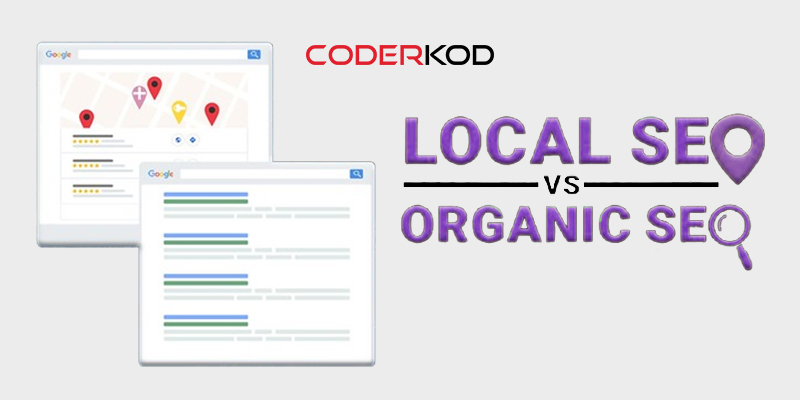
What is the Difference between Local SEO and Organic SEO?

Are you confused about the difference between Local SEO and Organic SEO? You’re not alone. Numerous organizations find difficulty in determining which strategy will help boost their search engine rankings. This article will help you understand the right plan for your business.

The local search engine results display businesses that use Local SEO marketing methods. Local SEO executes its approach by aiming for people residing in defined geographic regions. A wide application of Organic SEO drives website visibility throughout all general search results without focusing on any specific location target.

Above all both local and organic SEO approaches constitute essential elements for online business achievement. Through local SEO strategies, businesses achieve better visibility with potential clients who stay in the nearby area. The implementation of organic SEO leads to higher site visibility that enables national or worldwide reach. Your business receives added traffic potential from both approaches which leads to business expansion.

What is Local SEO?

When users seek services within their neighborhood, your business needs to appear through the implementation of Local SEO strategies. The Google Maps results for your nearby coffee shop search are possible because of Local SEO. The improvement of nearby business visibility happens when Local SEO makes them more visible across search results that match their specific geographic locations. 

The local 3-pack top results at the front of Google depend on three fundamental factors including business relevance along with the physical location and their ranking strength. The rankings become better when you improve your Google Business Profiles and obtain local business directory listings while ensuring precise information is kept across all platforms.

Local SEO Best Strategies

Optimize Your Google Business Profile

Any local search approach must start with optimizing your Google Business Profile which used to be known as Google My Business. The first opportunity that potential customers face your business presents itself when performing local searches. 

Your business visibility suffers if you don’t optimize its profile properly since this helps local algorithms detect your business quickly for customer discovery. Confirmation of your business name and exact representation of physical location offices with the correct Google Maps entry is essential for GBP setup. 

Business success depends on the selection of suitable categories and the addition of complete contact details including telephone number and accessible website information.

Leverage Customer Reviews for Trust

The foundation of customer trust creation depends on gathering customer reviews which serve as the most powerful tool for establishing trust. People who search for service options depend on received feedback to determine their choice between purchasing or using the service. 

Your internet presence remains strong when you handle customer feedback publically. A professional response to negative feedback combined with demonstrated genuine caregiver attitude turns criticism into an opportunity.

Effective Link Building Practices

Building links effectively stands as an essential factor in local search engine optimization. Backlinks act similarly to local citations that other relevant businesses provide in their professional practices. 

Their value functions as professional referrals. Your link building strategy should receive valid local references that redirect website visits to your business site or particular product pages. 

Accurate positioning of backlinks makes your content more visible while guiding users to visit your webpages because such methods also increase real-time visits when you operate from physical locations.

Benefits of Local SEO

Increased Online Visibility

Local SEO stands as the primary solution to boost the online discovery of your business. Local SEO strengthens your internet presence within a particular geographic zone therefore potential clients can find your products more readily. The core target of local search marketing is people who reside near your business and seek the products you distribute. The strong buying motives of local searchers make them more likely to convert into sales because they actively seek nearby options.

More Traffic to Your Store

Local SEO works as an advantage to generate direct customer traffic toward physical locations for businesses. The integration of Google Maps as well as route planning function enables quick location discovery for your customers. The capability to assist physical store business owners stands out since they heavily depend on store visits. Your ability to be found by customers strengthens your offline business operations which results in increased walk-in customer traffic.

Builds Trust and Credibility

Local SEO strategies that are well implemented create two essential benefits: they establish trust while enhancing credibility. Home consumers who leave positive feedback about the business develop trust among potential buyers as a result. This trust creates a basis for new purchasing decisions. 

Demographic research indicates that present-day customers conduct online reviews before ordering while excellent customer feedback and optimized profiles enhance purchase decisions. Strong local SEO helps companies establish enduring customer bonds which converts infrequent customers into lifelong clients.

Cost-Effective Marketing Strategy

Local SEO operates as an affordable marketing tool that stands out among other strategies. The results from implementing local optimization persist while you avoid spending continuously on paid search advertising which results in budget depletion. 

The approach functions just like standard organic SEO because it delivers your brand to suitable customers within their target period. A properly organized strategy enables businesses to improve their presence while gathering more residents as customers which leads to elevated ROI.

What is Organic SEO?

A website achieves better positions on search engine results pages through Organic Search Engine Optimization (SEO) besides sponsored ads. Organic Search Engine Optimization (SEO) enhances website content together with page structure and technical aspects for better search engine visibility. All businesses in all industries gain benefit from this since search engine users most often select results that appear on the initial page. 

The optimization of page content along with external factors works toward the accomplishment of attracting high-quality website visitors. The difference between Search Engine Advertising (SEA) which demands payment for ads becomes apparent since SEO provides enduring results while simultaneously establishing long-term credibility.

Organic SEO builds a system that guides users to access appropriate online information during their search activities. When users search for “Best places to travel” they receive results encompassing various states along with countries and global locations. Website optimization through these particular keywords leads to improved search engine ranking positions. 

Organic SEO Strategies

Keyword Research and Content Optimization

A successful organic search requires businesses to apply correct keyword research techniques for identifying customer search patterns. Businesses can reach their target search queries when they find terms that have both high search volume and achievable keyword difficulty. Searchable keywords make content production more important since it raises user discovery along with Google’s ranking position. SEO campaigns work by maintaining site content relevance for user search goals leading to superior organic search positions and stronger website traffic.

Website Structure and Internal Linking

Optimizing website structure is another key factor. A well-organized site with easy navigation ensures that important information is accessible to both users and search engines. Proper internal linking between pages improves the user experience, keeping page visitors engaged and reducing bounce rates. Using strong keywords as hyperlinks to top-performing content further enhances search rankings. Meanwhile, adding visual elements like pictures, infographics, and videos makes content more engaging. For better accessibility, including coded alt text on images helps Google understand their relevance.

Page Speed and Performance Optimization

Technical improvements like page speed optimization are essential. Since Google ranking factors have considered page load speed an SEO signal since 2010, businesses must ensure their site loads quickly. This requires working with a web development team to enhance performance and meet industry standards. Ensuring mobile-friendliness, refining HTML markups, and improving website speed all contribute to a smooth user experience.

Off-Page SEO and Authority Building

Off-page SEO efforts such as backlink building, review management, and citation building help strengthen authority. Managing listings across directories and responding to reviews boosts credibility, making it easier to reach consumers and build an online presence. Unlike paid advertising, these strategies provide long-term benefits. Keeping up with search engine guidelines and monitoring algorithm changes ensures continued success in the ever-evolving world of organic SEO.

Advantages of Organic SEO

Cost-Effective Growth

The primary advantage of Organic SEO enables business growth through natural means without repeated financial expenditures. Organic strategies concentrate on enduring success while businesses using paid search advertising must cover each click as well as each impression. Most experts support organic strategies because they establish lasting benefits while avoiding PPC’s perpetual financial commitment.

Long-Term Visibility

Correct implementation of Organic SEO leads websites to progressively attract more user traffic. Your website will maintain its good organic ranking indefinitely after achieving it although achieving that position requires time. Your business benefits from enduring success and continuous traffic by avoiding continuous expense outlays. Optimized websites develop trust in visitors and thus help businesses draw in new potential customers.

Enhanced Brand Trust

Websites which naturally emerge in search results gain superior trust from users than listings in paid advertisements. High website rankings make users view the content as trustworthy. A website’s true value becomes visible through its organic rankings since these distinctions differ from forced paid promotions. Businesses receive better engagement from customers together with increased lead generation because of trust.

Sustainable Online Presence

Implementation of powerful SEO strategies leads to doubled performance in both visibility achievements and brand awareness development. Businesses can use appropriate optimization strategies to reach diverse customers beyond geographical and demographic limits. Investment in high-quality organic content through SEO leads businesses to create a lasting online position that consistently expands with time.

Local or Organic SEO: Which is More Important for Your Business?

Understanding the Difference

The decision between using Local SEO or Organic SEO needs you to distinguish between them. Businesses that want appearance in search results regarding particular geographic areas should use Local SEO since it specifically serves brick-and-mortar operations as well as service vendors who need local consumer exposure. The goal of Organic SEO is to obtain website rankings across comprehensive search results which enables visibility to any demographic type.

Choosing Based on Business Goals

Every business model requires different weightage between Local SEO and Organic SEO influences. Restaurant owners alongside retail and service-based companies need to focus on Local SEO because it allows customers to locate their business through Google Maps and local listings as well as customer review platforms. The selection between Local SEO and Organic SEO depends on whether your business maintains an online platform alongside its customer base spanning national or worldwide territories.

Why Not Use Both?

Most organizations gain advantages from implementing strategies that combine elements of Local SEO alongside Organic SEO methods. Organic SEO enables businesses with digital marketing to expand their reach but when targeting nearby customers they should implement practices from Local SEO. Your website ranking along with brand awareness while acquiring more leads will improve when you implement both search engine optimization approaches.

Making the Right Choice

Selecting the right choice depends exclusively on what your business requirements are. You should concentrate on Local SEO if increasing physical store visits along with acquiring local client stands as your primary goal. Organic SEO remains the superior approach to achieve long-lasting growth because of its ability to sustain your business in the digital market. Businesses that implement both strategies will achieve their maximum reach potential.

How Businesses Can Benefit from Combining Local and Organic SEO

Wider Audience Reach & Increased Brand Visibility

Local SEO joint forces with Organic SEO enables businesses to facilitate connections with local clients as well as diverse internet audiences. The search engines inflate rankings for websites that have optimized performance thus revealing your brand in local search results as well as organic search outcomes. Through this approach businesses become accessible to potential clients who search for neighborhood services as well as industrial information.

Users gain better credibility alongside experienced trust combined with enhanced user experiences.

Your business obtains higher customer trust through combined Local SEO and Organic SEO achievements. Users develop stronger trust in businesses when they observe these companies listed at peak search engine positions and understand that many customers leave positive feedback about their services. The combined optimization strategy delivers better user experiences because it enables websites to remain mobile-friendly while maintaining fast operation and developing easy navigation systems.

Cost-Effectiveness & Higher Conversion Rates

SEO delivers enduring advantages accompanied by moderately maintained expenses unlike traditional advertising methods. Organic SEO maintains continuous website visits yet Local SEO leads to increased customer visits at physical stores. The combination produces better conversion results because users who search for particular services are inclined to perform desired actions which could include store visits or purchases.

Competitive Advantage & Data-Driven Strategies

A business obtains competitive advantage by implementing Local SEO with Organic SEO to exploit local market trends and target both local and national audiences simultaneously. Through data science businesses gain ability to transform marketing approaches for analyzing consumer conduct and maximizing organic search results while optimizing their content strategy.

Differences in Metrics and Measurement

Local SEO Metrics

Local SEO identifies the success rate of business operations through local search engine results. Successful business evaluation depends on metrics that include Google Business Profile performance as well as local rankings and customer reviews. Business success through local search depends on two metrics: foot traffic and Google Map click-through rates together with directions requests and customer phone calls.

Organic SEO Metrics

The field of organic SEO tracks both the general search position of websites across all search engines. Businesses evaluate performance by monitoring organic traffic alongside keyword position and users who exit quickly and the time users stay on the site and studied implementation of backlinks. Website performance insights come from domain authority measurements and conversion rate statistics and engagement data points to show how well websites hold visitors.

Actionable SEO Tips for Both Strategies

Businesses need to optimize their Google Business Profile and maintain uniform NAP details across all directories simultaneously working to maintain active review management. Displaying localized content while earning local backlinks greatly boosts search engine rankings.

The technique for Organic SEO begins with keyword analysis followed by web page element optimization including meta descriptions and title tags while creating ongoing valuable content publication. Major website performance improvements together with mobile-friendly design maintenance alongside recruitment of authoritative backlinks produces substantial ranking benefits.

A successful SEO strategy should unite the optimization techniques of Local and Organic SEO.

Businesses should unite SEO approaches to create a powerful SEO strategy. Businesses need to find equilibrium between local market information and wider industry knowledge and must apply formal data methods and extract performance data from Local SEO along with Organic SEO analytics. Effective business expansion occurs when organizations unite localized approaches with worldwide search capabilities to create maximum market penetration.

Conclusion

The knowledge about local SEO versus organic SEO services to enable online business expansion. Local SEO enables small businesses to appear when local users search for them leading to increased store traffic. By employing organic search methods businesses can enhance worldwide website visibility and gain a large pool of potential clients. 

The correct implementation of both local and organic SEO strategies helps businesses increase website traffic, build credibility, and drive more sales. Businesses should choose an SEO strategy based on their primary goals, target audience, and market reach.

For the best results, combining local SEO with organic SEO creates a powerful digital growth strategy. Local businesses can attract nearby customers and foot traffic while also expanding their online reach to a wider audience across search engines.

At CoderKod, we provide professional local and organic SEO solutions for businesses in the USA, UK, UAE, Germany, Pakistan, and worldwide—helping brands improve search visibility, user experience, and long-term online growth. Our data-driven SEO strategies are designed to boost rankings, increase conversions, and strengthen your digital presence.

Businesses that consistently track SEO performance indicators gain a competitive advantage and achieve sustainable growth in their industries.

Ready to grow your business online? Partner with CoderKod for result-driven Local & Organic SEO services and start ranking higher, attracting more customers, and increasing sales today!

A successful online business requires the implementation of both methods to create stable operations over the long run. Belonging to SEO guarantees business visibility which results in growth potential.